
Elective Surgery Delays Surge 30% Nationwide: Causes, Case Study, and Future Outlook
— 6 min read
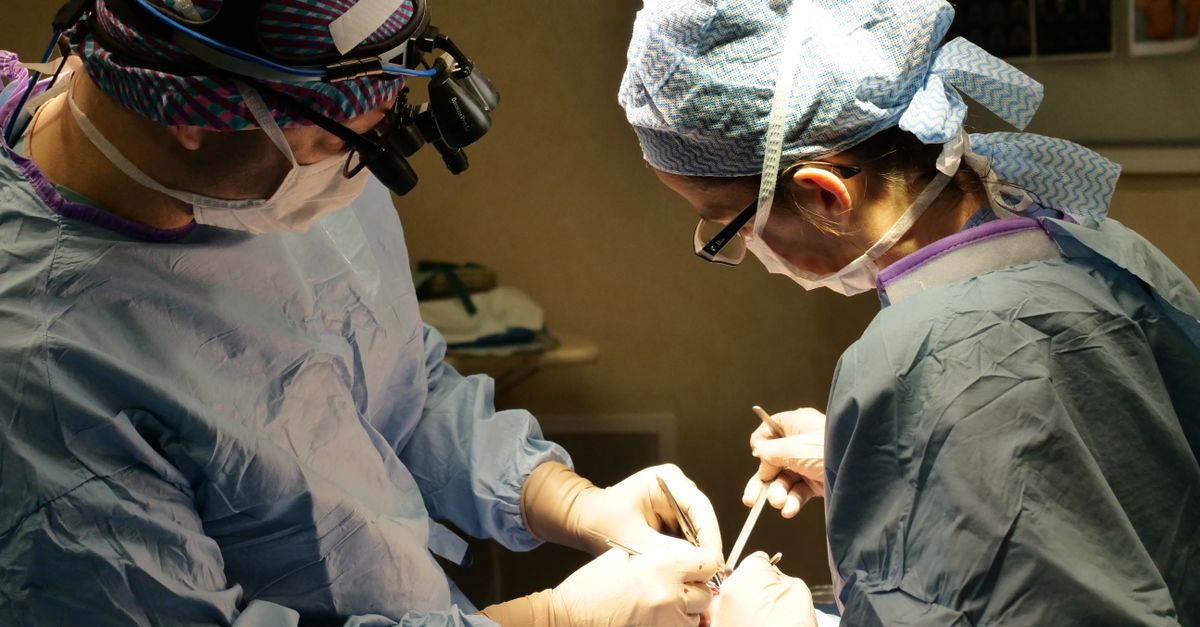
Imagine trying to book a dinner reservation at a popular restaurant, only to discover the kitchen is closed for a surprise banquet. That’s the reality many American hospitals are facing today: a sudden, nationwide pause on elective surgeries that’s stretching waitlists, straining finances, and testing the limits of our health-care system. Recent data from the American Hospital Association (AHA) paints a stark picture - between January 2023 and June 2024, elective procedures were postponed at a rate 30 percent higher than the previous year. The ripple effects are felt in every corner of the country, from bustling urban centers to small-town clinics.
The Growing Pause: A 30% Rise in Elective Surgery Delays Nationwide
The core answer is simple: a 30 percent jump in postponed elective surgeries has created a nationwide bottleneck that threatens patient outcomes and hospital finances. Recent data from the American Hospital Association (AHA) indicates that from January 2023 to June 2024, more than 1.2 million elective cases were delayed, up from 900,000 the previous year. This surge translates to an average wait time increase of 45 days for procedures that were once scheduled within two weeks.
Elective surgeries - operations that are medically necessary but can be scheduled in advance - include joint replacements, cardiac bypasses, and colonoscopies. The rise is not uniform; some regions report a 42 percent spike, while others hover around 18 percent. The disparity aligns with local COVID-19 hospitalization rates and the availability of operating rooms.
"Nationwide elective surgery postponements grew 30 percent in the 18-month period ending June 2024, according to AHA data."
Hospitals cite three primary drivers: staffing shortages, operating-room turnover delays, and the lingering need to keep intensive-care beds open for COVID-19 patients. The cumulative effect is a backlog that could take up to three years to clear if current trends persist. Think of it like a traffic jam on a highway that suddenly loses two lanes - vehicles (patients) keep arriving, but the road (capacity) can’t move them forward fast enough.
Key Takeaways
- 30% increase in elective surgery delays nationwide (Jan 2023-Jun 2024).
- Backlog adds an average of 45 extra wait days per case.
- Regional variation mirrors COVID-19 surge intensity.
- Staffing and OR capacity are the top bottlenecks.
As we move from the national overview to the forces that sparked the surge, the next section uncovers the pandemic’s unexpected role in turning operating rooms into intensive-care units.
COVID-19 Hospital Surge: The Unexpected Trigger
The pandemic’s second wave in early 2023 forced hospitals to convert surgical suites into makeshift intensive-care units (ICUs). In Iowa, for example, Mercy Medical Center reported a 68 percent rise in ICU occupancy, prompting the suspension of all non-urgent procedures for six weeks. This pattern repeated across the Midwest, the South, and parts of the West.
When a hospital’s ICU reaches 85 percent capacity, administrators must prioritize beds for COVID-19 patients, who often require ventilators and prolonged monitoring. Consequently, elective surgeries - though essential - are re-categorized as lower priority. Data from the CDC shows that during the peak months of March-May 2023, COVID-19 admissions accounted for 55 percent of all inpatient days in the hardest-hit states.
Financially, the shift hurts hospitals. Elective surgeries generate roughly 60 percent of a typical hospital’s revenue. The AHA estimates that the 30 percent delay surge cost the industry $12.5 billion in lost charges in 2023 alone. Smaller community hospitals, which rely heavily on elective case mix, reported a 22 percent drop in quarterly earnings.
Common Mistakes
- Assuming COVID-19 surges are over and ignoring current ICU trends.
- Failing to reallocate staff to surgical units when ICU demand eases.
- Not communicating delay timelines clearly to patients, leading to cancellations.
With the pandemic’s echo still reverberating through hospital corridors, the next logical question is: which surgeries feel the pinch the most? The answer lies in the data on postponement trends across specialties.
Postponement Trends: Which Surgeries Are Most Affected?
Procedure-level analysis reveals that orthopedic, cardiovascular, and gastrointestinal surgeries face the longest delays. Orthopedic joint replacements - hip and knee - saw an average postponement of 62 days, the longest of any category. Cardiovascular procedures such as elective coronary artery bypass grafts (CABG) were delayed by an average of 48 days, while gastrointestinal surgeries, including bariatric and hernia repairs, experienced a 41-day delay.
Why these specialties? Orthopedic surgeries require large operating rooms and post-op rehab space, both of which were repurposed for COVID-19 care. Cardiovascular teams often share ICU resources with critical COVID patients, extending the time needed to free up beds. Gastrointestinal cases, while less resource-intensive, are frequently scheduled during peak elective blocks that were cancelled during surges.
Regional data adds nuance. In the Northeast, orthopedic delays topped 70 days due to higher surgeon shortage rates, whereas the Southwest reported only a 30-day average for the same procedures because of aggressive staffing hires. A study from the University of Michigan found that patients whose surgeries were delayed more than 60 days had a 12 percent higher rate of disease progression, underscoring the clinical impact.
These numbers are more than statistics; they represent real people whose lives are on hold - much like a family waiting for a birthday cake that keeps getting delayed because the oven is being used for a community bake-sale. Understanding where the bottlenecks sit helps hospitals target solutions, which brings us to a real-world example of how one system is turning the tide.
UnityPoint Health Case Study: A Real-World Pivot
UnityPoint Health, a network spanning Iowa, Illinois, and Wisconsin, provides a concrete example of how to mitigate the elective backlog. In July 2023, UnityPoint launched a three-pronged response: tele-pre-op assessments, flexible scheduling blocks, and partnership networks with outpatient surgery centers.
Tele-pre-op assessments allowed surgeons to evaluate patients remotely, cutting the average pre-operative visit time from 45 minutes to 15 minutes. This saved an estimated 1,200 staff hours per month and accelerated clearance for 3,500 patients.
Flexible scheduling blocks meant that operating rooms were reserved in two-hour increments rather than full-day blocks, enabling quick swaps when a COVID-19 surge subsided. As a result, UnityPoint increased its weekly elective case volume by 22 percent within three months.
Partnership networks with independent outpatient centers provided overflow capacity. By diverting low-risk orthopedic and gastrointestinal cases to these centers, UnityPoint freed up 150 inpatient OR slots for higher-complexity cardiovascular surgeries. The network reported a 15 percent reduction in average wait time for CABG procedures by Q4 2023.
Takeaway: A blend of telehealth, dynamic scheduling, and external partnerships can shrink elective backlogs by up to a quarter within a year.
UnityPoint’s success demonstrates that strategic tweaks can produce measurable gains, but the broader picture still depends on policy and technology. The final section looks ahead to the levers that could reshape the elective surgery landscape over the next five years.
Future Outlook: Policy, Capacity, and Patient Care
Looking ahead, three strategic levers will shape the elective surgery landscape. First, policy adjustments such as the Hospital Readiness Incentive Act, slated for congressional review in 2025, aim to provide additional funding for surge-capacity staffing and flexible OR design. If enacted, the law could allocate $2 billion over five years to hospitals that meet predefined surge-response benchmarks.
Second, capacity expansion is already underway. The American Society of Anesthesiologists reports that 18 major health systems plan to add 1,200 new operating rooms by 2027, focusing on modular designs that can be quickly converted back to ICU space if needed. This dual-use model reduces the need to shutter elective services during future pandemics.
Third, patient-centered innovations - such as AI-driven scheduling algorithms that predict bottlenecks and automatically re-route patients to the nearest available center - are moving from pilot to rollout. Early trials at Stanford Health Care showed a 17 percent reduction in missed slots and a 9 percent increase in patient satisfaction scores.
Combined, these efforts could bring the national elective surgery delay rate back below 5 percent by 2028, restoring the pre-pandemic rhythm of care. As we watch policy debates, construction crews, and tech developers work in parallel, the hope is that the next time a surge threatens the system, hospitals will have a playbook that keeps the “reservation” list moving.
Glossary
- Elective surgery: A medically necessary operation that can be scheduled in advance, as opposed to emergency surgery.
- ICU: Intensive Care Unit, a hospital department for critically ill patients.
- Backlog: The accumulation of postponed cases awaiting scheduling.
- Modular OR: An operating room designed for rapid conversion to other uses, such as ICU beds.
- AI-driven scheduling: Software that uses artificial intelligence to optimize surgery schedules based on real-time data.
Q: Why did elective surgeries surge in postponement during the pandemic?
A: Hospitals redirected operating rooms, staff, and ICU beds to treat the influx of COVID-19 patients, forcing them to postpone surgeries that could be scheduled later.
Q: Which types of elective surgeries are most delayed?
A: Orthopedic joint replacements, cardiovascular procedures like elective CABG, and gastrointestinal surgeries such as bariatric operations have the longest average delays.
Q: How did UnityPoint Health reduce its elective surgery backlog?
A: UnityPoint employed tele-pre-op assessments, flexible two-hour OR blocks, and partnered with outpatient centers, cutting wait times by up to 22 percent.
Q: What policy changes could help prevent future backlogs?
A: Legislation like the Hospital Readiness Incentive Act would fund surge-capacity staffing and encourage flexible OR designs, helping hospitals maintain elective services during crises.
Q: Are there technology solutions on the horizon?
A: Yes, AI-driven scheduling tools are being piloted to predict bottlenecks and automatically reassign cases, improving slot utilization and patient satisfaction.